
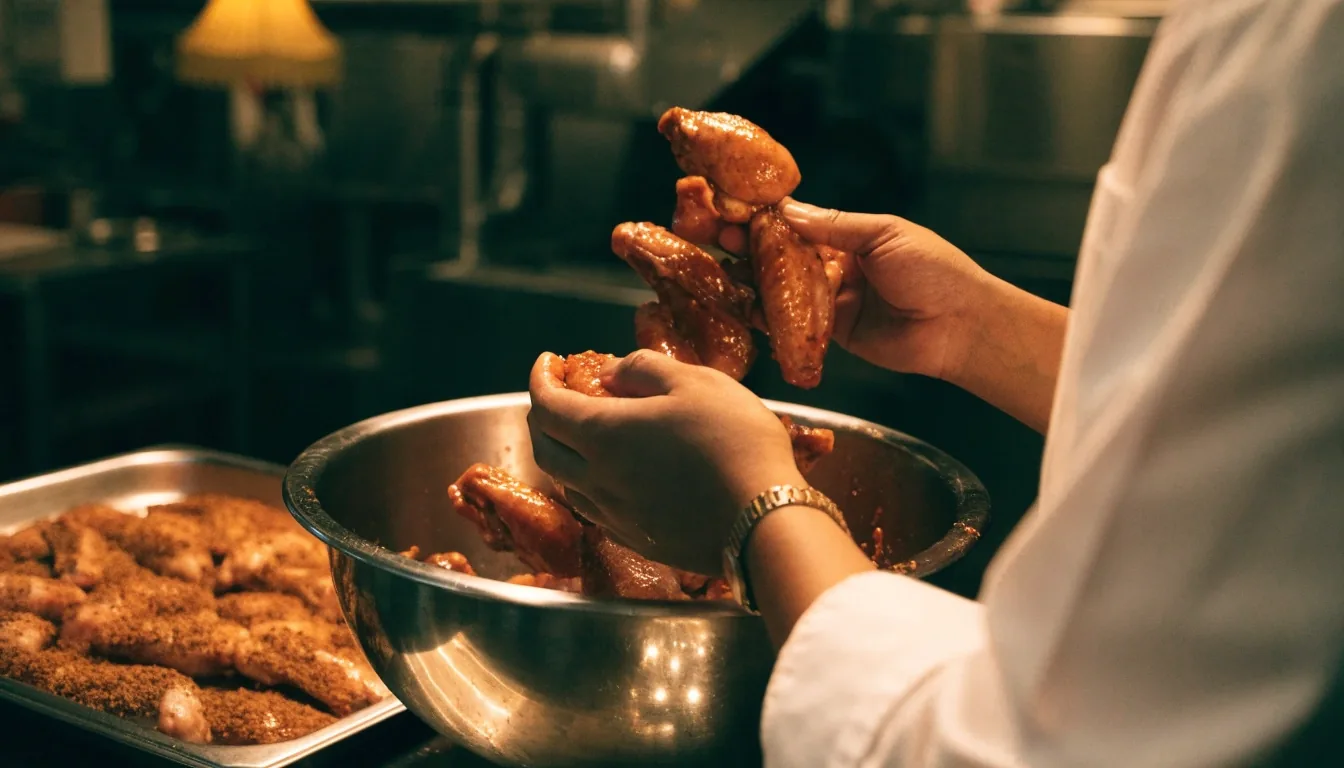
Wingstop flavors guide
Choosing a Wingstop Flavor That Fits
Sauced or dry rub first, flavor name second. This guide walks through how Wing Stop wings behave in the box and on the table, so you can pick with confidence for carryout and delivery in Canada.
Start here
Sauced versus dry rub: the real fork in the road
Wingstop's flavor list is long enough that the first choice is not which flavor is best, it is which family you want. Sauced flavors and dry rubs behave differently on the wing and differently in a takeout box.
Sauced flavors coat the wing in a wet glaze, which is what most people expect from a wing order. Dry rubs use a seasoning blend with no wet coating, so the wing stays crisp and the seasoning sits on the surface rather than soaking in.
The practical difference shows up in transit. A saucy wing softens a little in a closed box, while a dry rub holds its texture longer. If you are ordering delivery, this one decision matters more than the specific flavor name. If you are eating right away at the counter, both work well.
Sauced wings
Wet glaze, familiar bite, softer after a longer ride home. Order them when the drive is short.
Dry rub wings
Dry seasoning, crisp finish, steady from first wing to last. The stronger pick for delivery.
Quick rule: eating now — either family. Driving across town — lean dry rub, keep sauce on the side.
Compare wing typesFlavor index
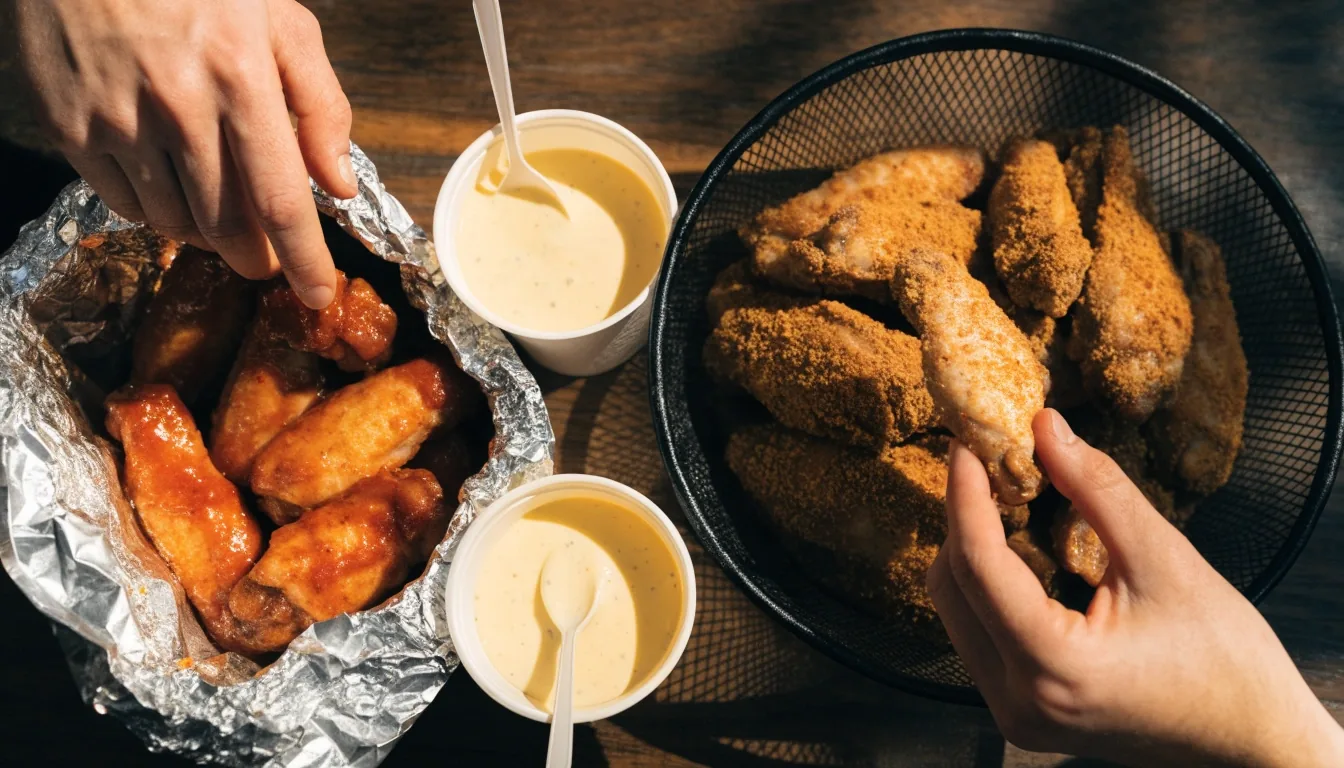
Two families, one tray. Pick your side.
These are the directions regulars actually order. Read down the list and notice which description sounds like your table.
Louisiana Rub is marked as the starting point for dry-rub newcomers. The rest of the list is about heat and sweetness preference.
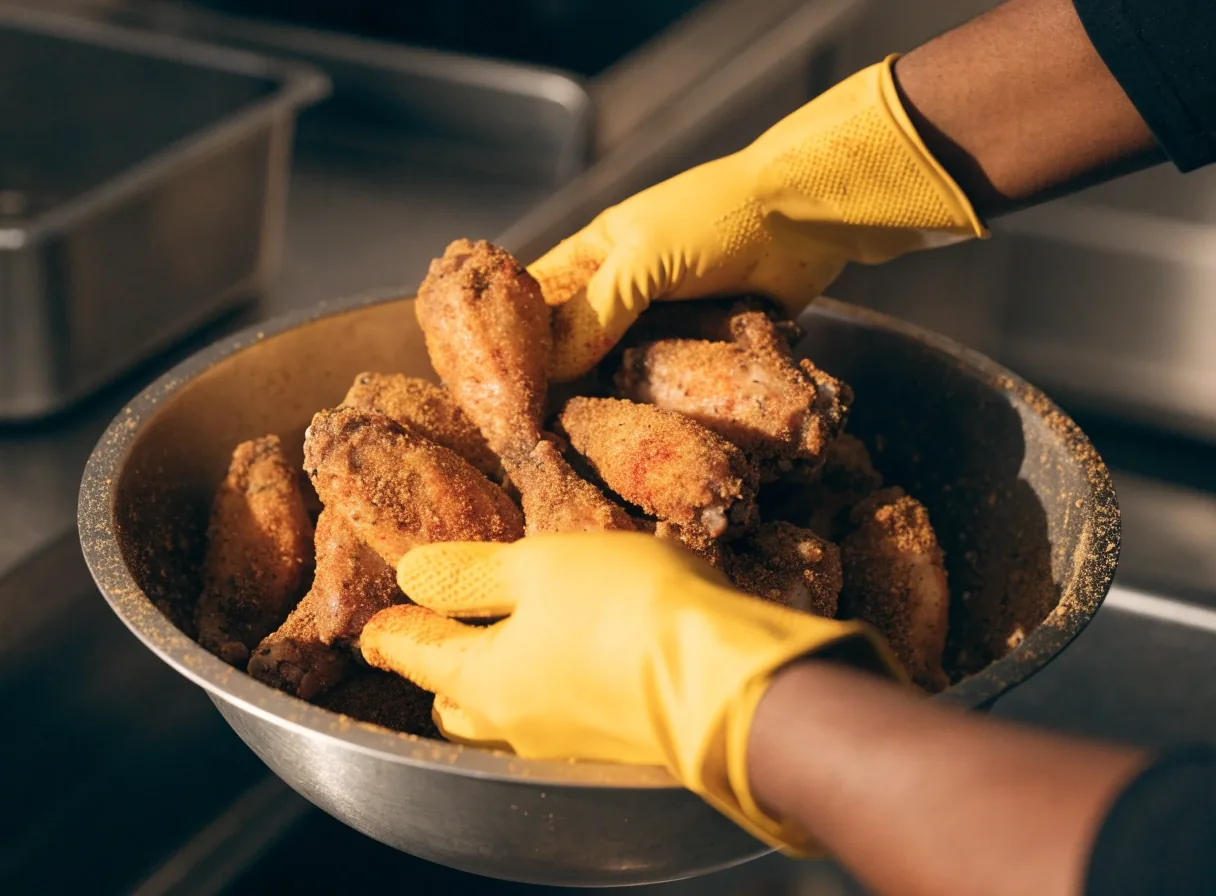
Louisiana Rub and the dry-rub category
Louisiana Rub is the signature dry rub and the clearest example of what the category does. It is seasoned and savory rather than built on a hot-sauce base, which makes it a good entry point if you want bold flavor without heavy heat.
Dry rubs also suit people who dislike sticky fingers or who are sharing with someone who does. Because there is no sauce to settle, the flavor stays consistent from the first wing to the last. It is the flavor most likely to convert a sauce-only person.
Try it on bone-in first. The crisp edge carries the seasoning well, and you will know after a few wings whether the dry-rub direction is yours.
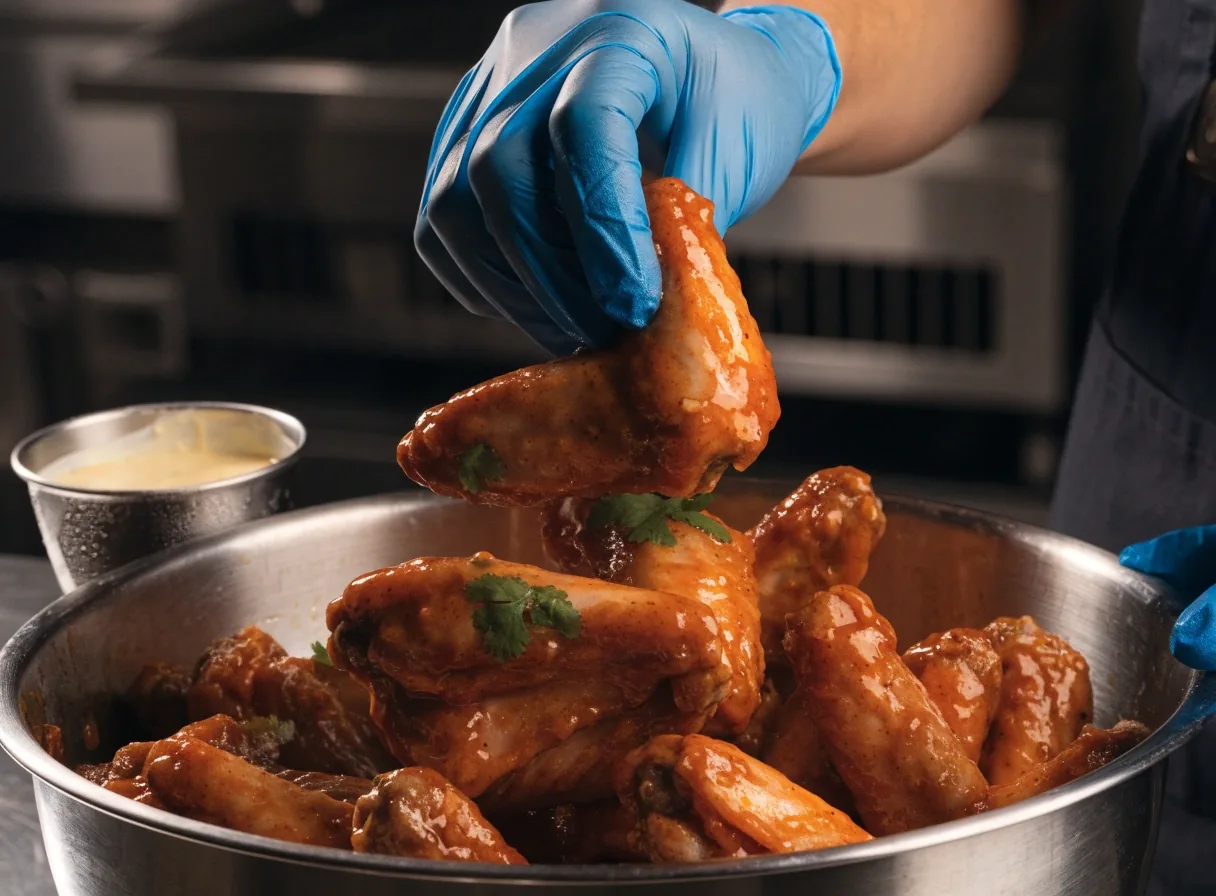
Buffalo and the sauced classics
Buffalo-style profiles are the baseline of the sauced side and the flavor most people picture when they hear wing sauce. Vinegary, buttery, heat-forward, ranging from mild to genuinely hot.
They pair naturally with a cooling dip, which is why the classic combo exists. For a group with mixed heat tolerance, a Buffalo-style sauce is usually the safest shared choice because everyone recognizes it.
One caution: this is the flavor that suffers most from a long delivery trip. Keep the drive short or ask for sauce on the side.
Middle of the menu
Sweet, savory, and everything between
Beyond Buffalo and dry rubs, the Wingstop lineup runs through sweeter glazes, garlic and herb profiles, and options that sit between mild and hot. This is where personal preference takes over and where recommendations help least, because a glaze that reads as balanced to one person reads as too sweet to another.
A reasonable approach is to order one flavor you know and one you have not tried, rather than two unknowns. If you are ordering for people you do not know well, stay near the middle of the range and let them add heat themselves with a hotter dip or a side portion.
Heat without guesswork
Treat heat as a separate decision
Heat is the part people get wrong most often, usually by ordering hotter than they actually want in a group setting. Pick the profile you like, then pick its heat level, rather than assuming the hottest version is the same taste turned up.
- Include one mild option for the table, even if nobody asked. Someone will use it.
- A mild wing that gets eaten is worth more than a hot one that sits untouched.
- On boneless wings, hot flavors land harder, so step heat down one notch.
Order for the table, not the dare.
Pairing dips with your flavor
The dip is not decoration, it changes how the wing tastes. Creamy, cooling dips work with heat because they cut it, which is why they are standard with Buffalo-style sauces.
Dry rubs pair well with the same cooling dips for a different reason: the dip adds moisture that the seasoning does not provide. Sweet glazes usually want balance rather than a match, so a plain or lightly seasoned dip tends to work better than another sweet one.
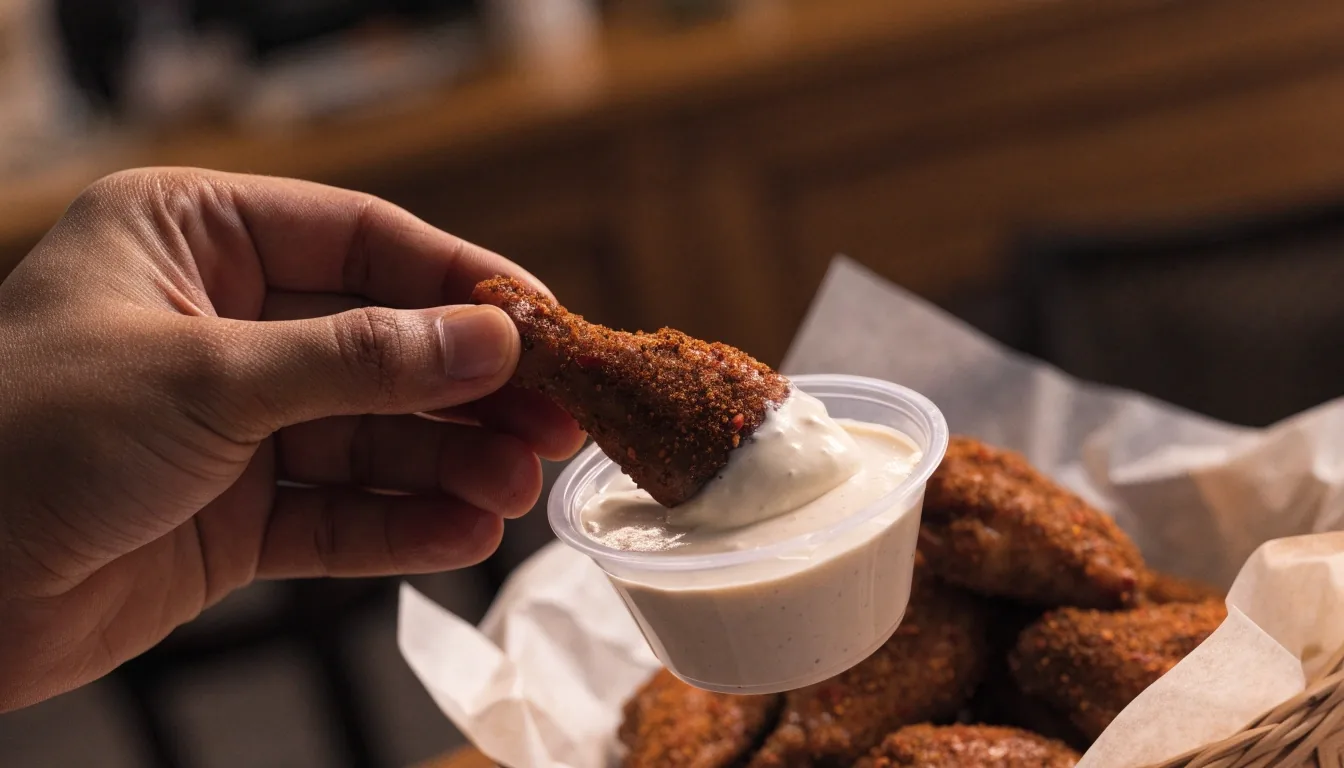
If you ordered two very different flavors, get two dips and keep them separate so the tastes stay clean.
Ordering flavors for a group
Group orders fail when there are too many flavors and not enough of any one. For four people, three flavors is the workable shape.
If the group is larger, add a wing type rather than a fourth flavor. And if you are ordering boneless for the group, remember boneless takes sauce more heavily, so heat lands harder than on bone-in.
A beginner's route through the lineup
Never ordered from Wing Stop before? Split one order: Louisiana Rub plus a Buffalo-style sauce. Taste both, note which direction you preferred, and let that decide your next order. Two orders in, you will know whether you are a dry-rub person or a sauce person.
Flavor questions, answered plainly
Still weighing dry rub against sauce? These are the questions counter staff hear most. For anything more specific, send a note and we will help you narrow it down.
Ask about a flavorWhat is the difference between a dry rub and a sauced wing?
A dry rub is a seasoning blend applied without a wet coating, so the wing stays crisp and the flavor sits on the surface. A sauced wing is coated in a wet glaze, which is the more familiar wing experience but softens slightly in a takeout box.
Which flavor works for someone who does not like spicy food?
Start with the dry rubs, especially Louisiana Rub, which is savory rather than hot. On the sauced side, the milder and sweeter profiles are the safer choice. You can also split an order so only part of it carries heat.
Do boneless wings taste different with the same flavor?
The flavor is the same, but boneless wings take on sauce more heavily because there is more surface area and no bone. A hot flavor will land harder on boneless. Dry rubs behave more consistently across both.
Can I order more than one flavor in a single order?
Yes, and splitting flavors is common. The practical limit is about three flavors for a group of four, since more than that means nobody gets a full portion of the one they wanted.
Hungry? Turn the pick into a plan.
Check the full Wingstop menu guide, find a counter near you at 251 Yonge Street, Toronto and beyond, open Mon–Sun 11:00 AM – 11:00 PM, or head back to the home guide to start over.